
69 The hungry gap
or not so much; and clafoutis, but not as you know it

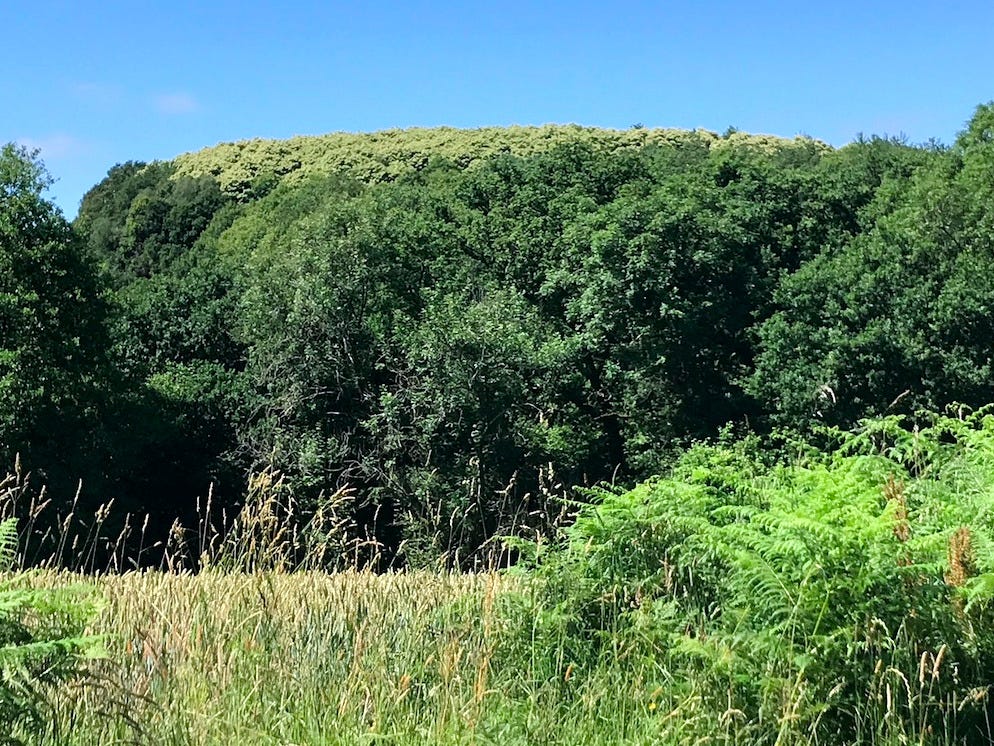
I realise this won’t look like much. It’s a local hilltop, crowned with flowering* sweet chestnuts: that paler patch at the top will be utterly humming with bees. This time of year the hilltop starts to blaze golden, though I haven’t done it justice. Chestnuts were a staple food here (along with buckwheat, blé noir or gwinizh du), as in other rural areas in France such as the Cévennes. The woodland adjoining our meadows is full of them and they do constitute a bit of our foraged protein. * The ‘flowers’ are like very long catkins.
I love watching the changes and the individual characteristics – timing and abundance, for instance – each season of each of the seven sweet chestnut trees we see from the bedroom balcony on the boundary of the Home Meadow. I try not to have favourites, but I do: second from the right after the two tall birches. What is it about her? She’s neither small and retiring, nor tall and in your face; but she very much dances to her own tune in terms of timing. She’s flagrantly fragrant and exuberant. This year, she is so floral that you can barely see the branches. I swear she wears a permanent smile; flounces when I look at her.
Ah the other-than-human. How it can carry us, if we let it.
One granite ridge
A tree, would be enough
Or even a rock. A small creek,
A bark shred in a pool…
…Sky over endless mountains.
All the junk that goes with being human
Drops away…
Gary Snyder, Piute Creek
*
How I love the fecundity and youthful ripening of June; and that I can sit outside under the old and crumbling cherry tree and in minutes see a flock of young long-tailed tits, a warbler, a whitethroat and a flycatcher, hear the thrush in his dawn-to-nightfall solo, and watch a hen blackbird take a bath in the dog’s water bowl, all within a very few yards. And then a couple of twittering swallows and a small group of screaming swifts fly over, and it’s the idyll it looks like, but doesn’t always feel like from the inside. (Paradise on earth, after all, requires quite a lot of sweat and muscle if it is to feed you.)
*
So we’re coming to the end of the hungry gap. I find the phrase ‘the hungry gap’ very evocative – enough as to have nearly used it as a title for my second novel, which in the end became The Burning Ground. (I hate to say this as I don’t approve of Amazon, but that book, like many of my others, is available there, though bookshop.org and Blackwell’s mark it as unavailable.)
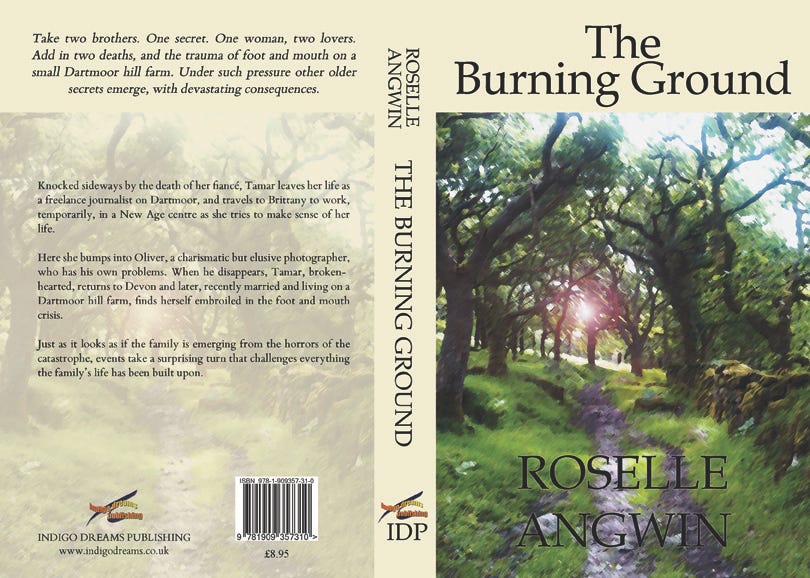
But this post is not about that, but about learning, as a grower and occasional forager, exactly how much there is still to eat in the hungry gap, largely as a result of TM’s hard work.
When you live on local organic food, your own or something like a seasonal veg box, or produce from a local market, you know that not much fills that hungry gap for a couple of months from when last year’s crops have mostly gone and this year’s are still to produce – too many roots, a few spring greens. Or that is how it used to be.
We’ve just had three or four weeks of buying vegetables for the first time (apart from e.g. the occasional aubergine in season, and avocado and asparagus ditto) rather than eating only our own, and already the new crops are yielding a little, so we won’t need to continue. It’s very satisfying indeed to realise that we have nearly achieved year-round vegetable self-sufficiency, and that includes beans and nuts for protein, and fruit too. Of course we still buy lemons, olive oil, tea, flour, plant milk.
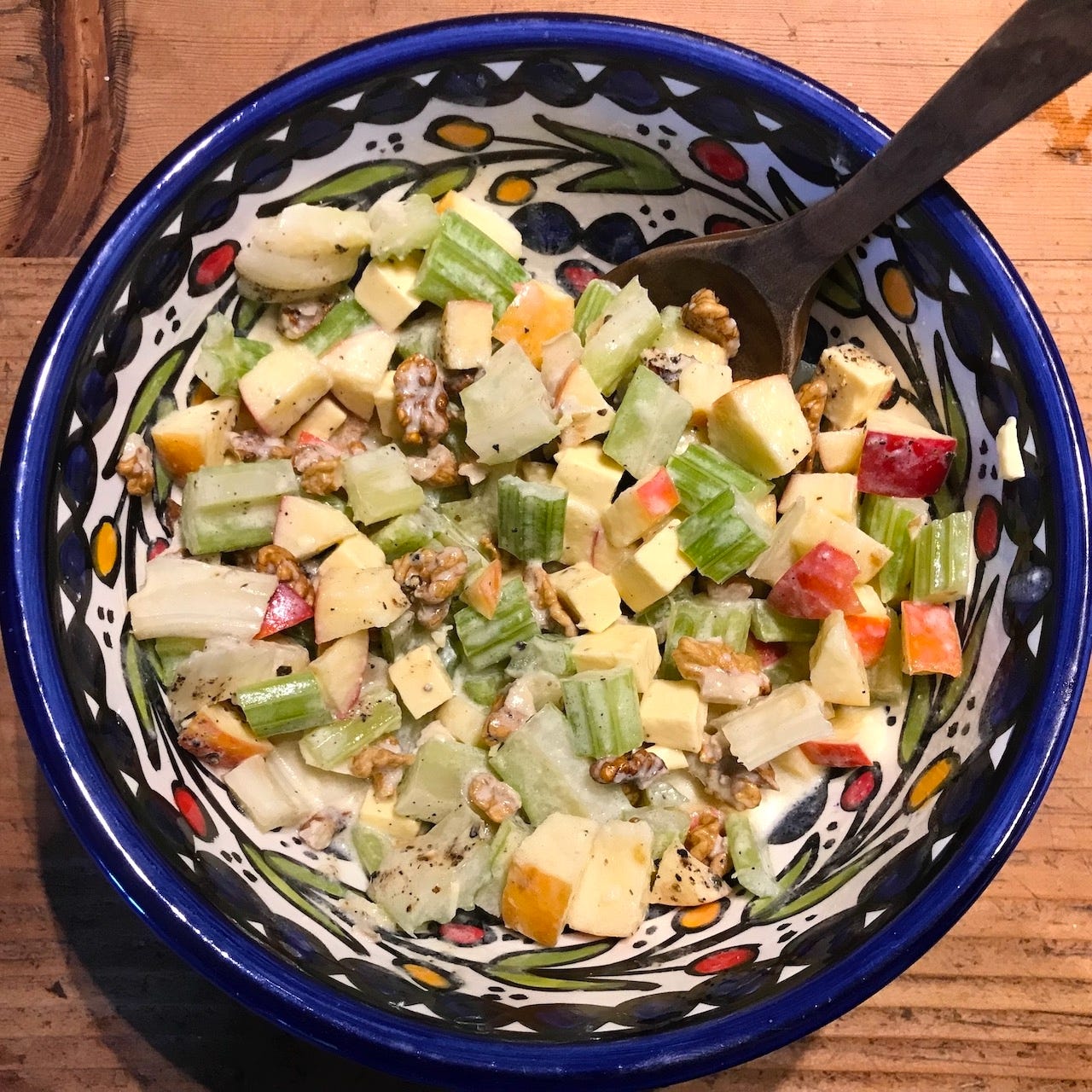
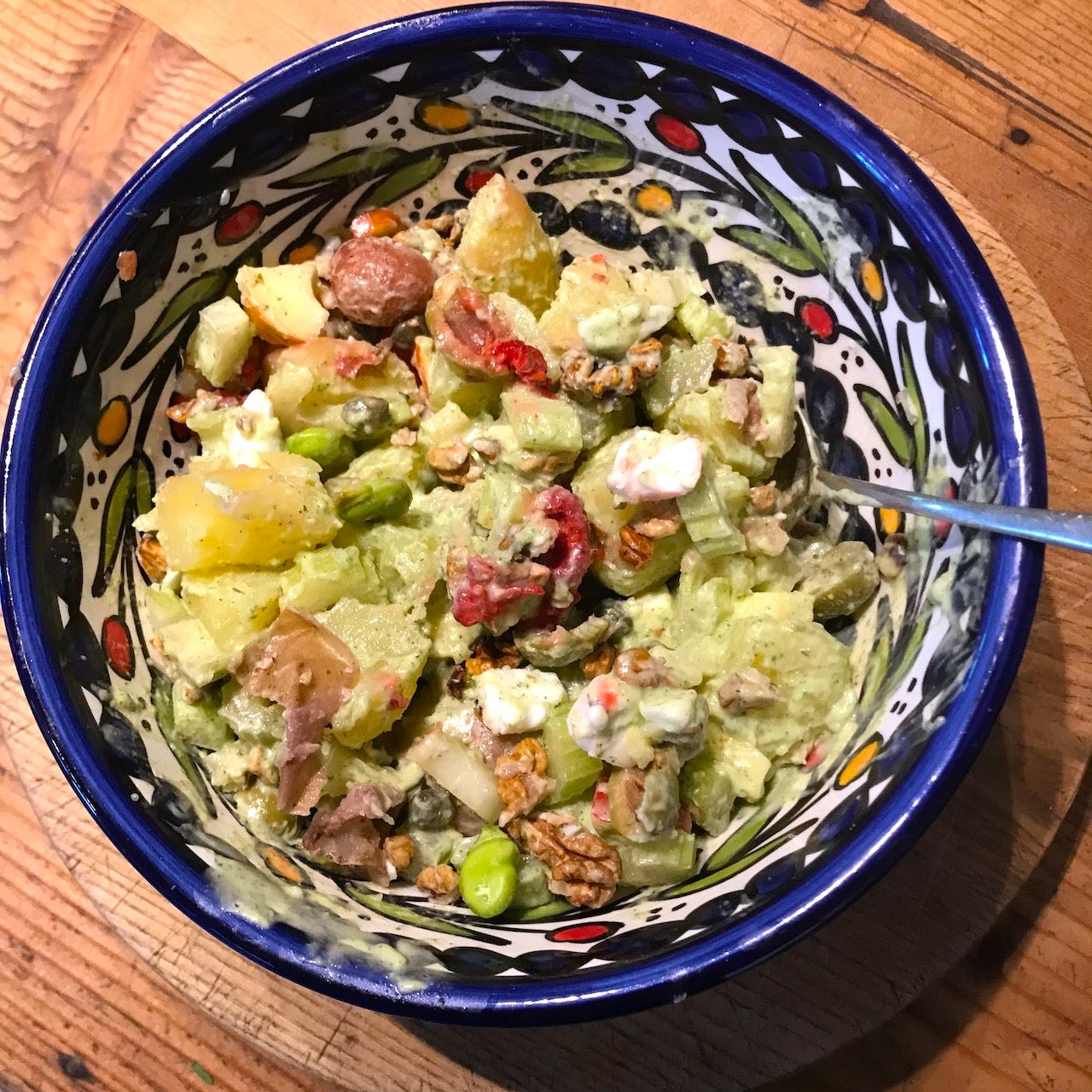
These are two variations on a Waldorf salad: our walnuts, our neighbour’s celery, the first of our new potatoes, some chives, an onion, an apple, and home-made vegan mayo. The second includes capers, and raspberries and the first broad beans from the garden.
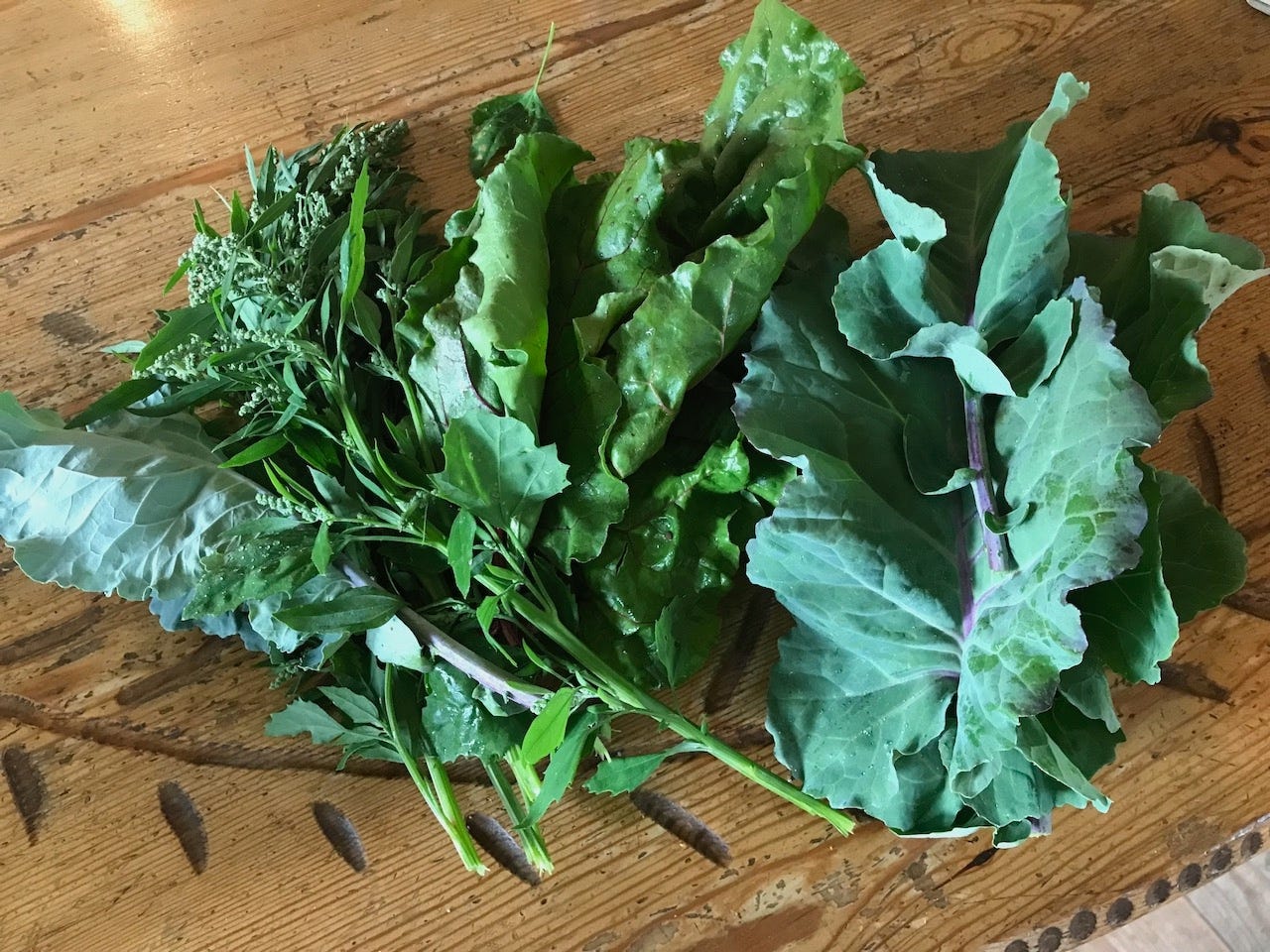
Greens: we have new spinach, new rainbow chard*, beet leaves, masses (and masses) of perennial kale (the one with the purple ribs in the second picture below), and foraged fat hen, or chenopodium album. (I say ‘foraged’, but really it’s ‘weeded’: our beds are sprouting millions of self-seeded fat hen plants.)
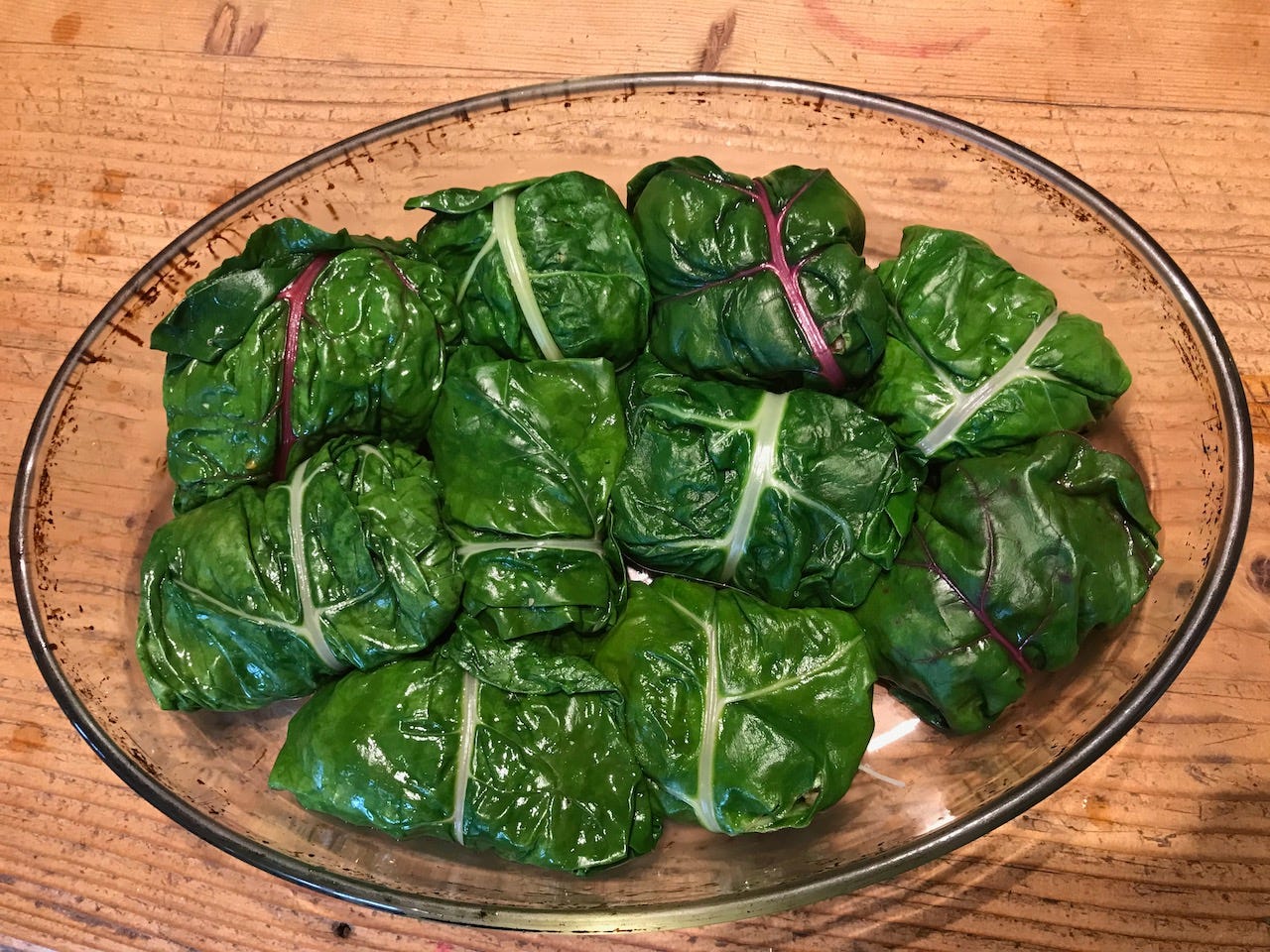
*I have just invented Chard Parcels – a complicated but rather nice northern version of dolmades. I’ll post a recipe here some time.
Fat hen, the seedy one on the left below, is a nutritious food. Its use as a food plant dates back to Neolithic times. Food For Free man Richard Mabey tells us that it contains more iron and protein than either cabbage or spinach, and more vitamin B1 and calcium than raw cabbage. Steam the plant or the stripped leaves and seeds, or sauté with a little oil, lemon and optional garlic.
When my daughter was growing up we had very little sweet stuff, and no sugar in the house. But when it came to cherry or plum season, I would buy in sugar just to make clafoutis for my daughter – her favourite sweet (apart from crème brûlée, which I’ve never made).
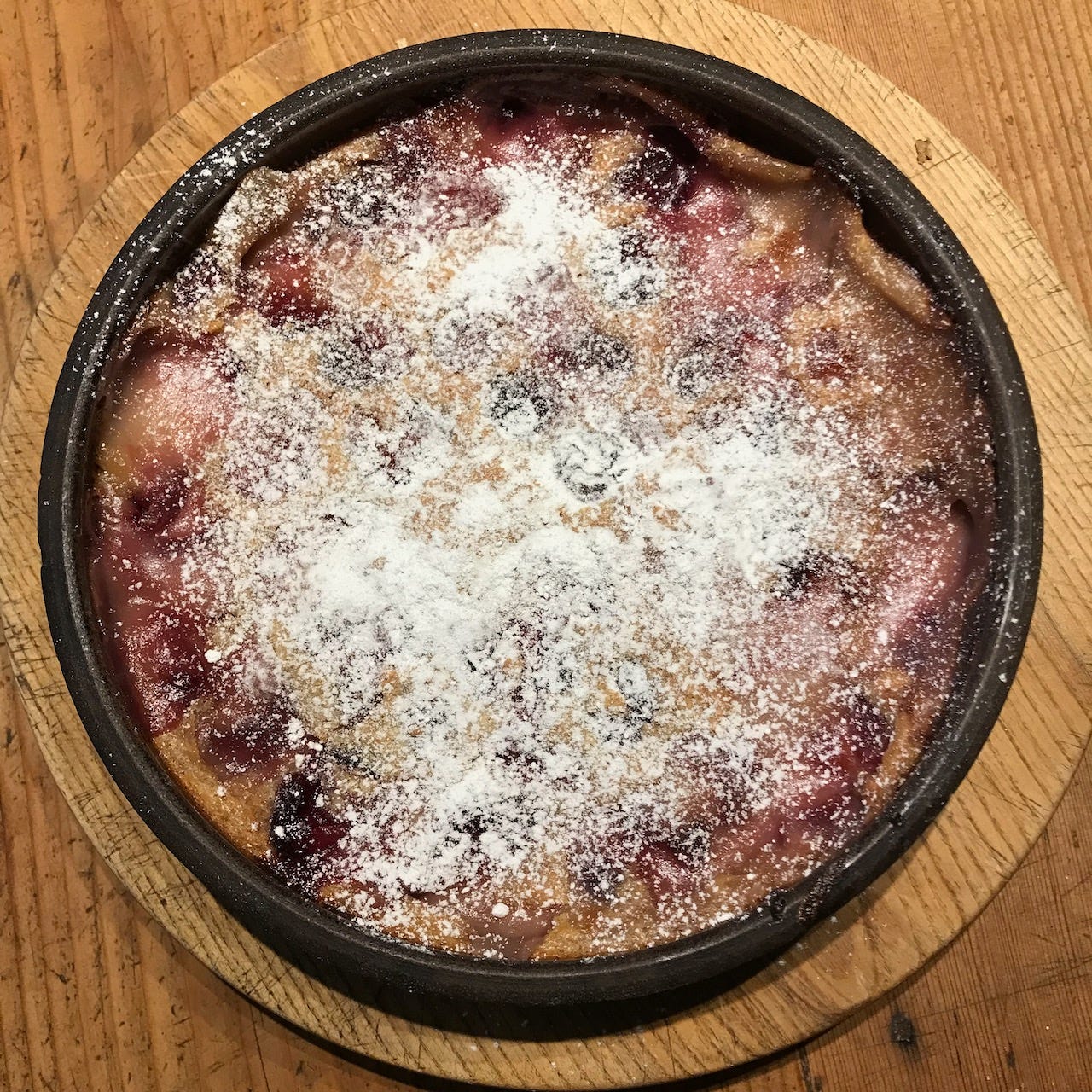
Hard to describe clafoutis, except that it’s a creamy sweet batter with stoned fruit, traditionally cherries, embedded in it. I love that it’s seasonal.
If you were to look it up, you would see that my vegan version looks nothing like the orderly classics (nothing I make seems very orderly; but then all mine are wholefood-based vegan dishes: gross lumpen vegan peasant fare, as a friend once called my cooking). When my daughter was growing up, we were vegetarian but not vegan, so clafoutis was based on dairy cream and eggs.
I’ve just made a vegan version (which TM describes as ‘lovely’: praise indeed from him). It’s creamy and sticky and moreish, but as it doesn’t set firmly, you scoop it rather than cut it. The first one was cherries, but I’ve just used up the last of last year’s frozen harvest of what in Devon we’d called mazzards: bullaces, or little wild damsons. I’m still experimenting with quantities of liquid; go easy on the milk. Mine is gluten-free but you could substitute ordinary flour for the rice flour.
Put oven on to 200º
500 g pitted fresh cherries (or enough to fully line, fatly, a 20 cm ovenproof dish)
3 tbsps aqua faba (the liquid from tinned/cooked chickpeas or even white beans)
200 ml plant cream, oat or almond preferably
100 ml plant milk
2 – 3 tsps vanilla extract
120 g sugar (I use organic raw brown)
50 g rice flour
1 dstsp icing sugar to dust the top
Lightly oil the baking dish. Pack in your pitted cherries in a single tight layer.
Beat or whisk the aqua faba till its frothy. Mix together the cream, milk and vanilla; gently mix in the aqua faba.
Mix the flour and sugar in a medium-large bowl; stir the liquids in.
Pour over the cherries, but don’t drown them.
Bake for 35–45 minutes.
When it’s a little cooler, dust with the icing sugar (I used too much).
It’s best eaten warm, but is also delicious for breakfast, maybe with muesli.
Thank you as always for being here and reading, my friends. If you try this recipe, I’d love to know how it turns out.
Lovely Ro! I confess, the picture of you just sitting under the crumbling cherry absorbing your surroundings is tinged with wistfulness! Although, I'm sure it would be too hot to do so this week! xxx
By the way the blackbird did get all my cherries. Every one and they weren’t even ripe. I’m trying to forgive him.